
Global trends and trading activity of foreign investors would largely dictate terms in the equity markets this week amid a lack of major domestic triggers, analysts said. Markets may face near-term consolidation due to elevated valuations, they noted. "While the previous week was predominantly shaped by developments in the US Federal Reserve policy, attention will now shift to the Bank of Japan's policy decision on December 19," Santosh Meena, Head of Research, Swastika Investmart Ltd, said.

The Sensex finished above the psychologically key 60,000-mark while the Nifty surged past the 18,000-level on Monday on across-the-board buying amid a mixed trend overseas. A depreciating rupee and concerns over the US Federal Reserve hiking rates later this week failed to quell investors' appetite for stocks, traders said. The 30-share BSE Sensex rallied 786.74 points or 1.31 per cent to settle at 60,746.59.

Benchmark indices Sensex and Nifty bounced back on Tuesday to close over 2 per cent higher amid positive trends in global equity markets. The 30-share BSE Sensex spurted 1,276.66 points or 2.25 per cent to settle at 58,065.47. During the day, it zoomed 1,311.13 points or 2.30 per cent to 58,099.94. The broader NSE Nifty rallied 386.95 points or 2.29 per cent to end at 17,274.30.

Equity benchmarks Sensex and Nifty faced heavy drubbing on Thursday, falling over 1 per cent each, in tandem with weak global markets following the US Federal Reserve's interest rate hike and its hawkish stance. The 30-share BSE Sensex tanked 878.88 points or 1.40 per cent to settle at 61,799.03. During the day, it tumbled 962.3 points or 1.53 per cent to 61,715.61.


Among the Sensex firms, Infosys, Tech Mahindra, HCL Technologies, Tata Consultancy Services, Wipro and JSW Steel were the major gainers during the morning deals. Nestle, Bharti Airtel, Axis Bank ITC were among the laggards.

The other board members will be Sunil Mehta, former non-executive chairman of Punjab National Bank, as the non executive chairman of Yes Bank, Mahesh Krishnamurthy and Atul Bheda as non-executive directors.

Indian equity markets had a good run in the first half of calendar year 2023 (CY23), with the S&P BSE Sensex and the National Stock Exchange Nifty50 hitting fresh 52-week highs. While the Sensex scaled up to a peak 64,718, the Nifty50 hit Mt 19,189. As the markets now prepare to enter the second half (H2) of CY23, all eyes are on global central banks, especially the US Federal Reserve, as to when they will pause and pivot as regards their interest-rate cycle.

An Enforcement Directorate team undertaking searches in a cyber fraud linked money laundering case was allegedly attacked in New Delhi on Thursday, officials said.

India's rupee is likely to remain under pressure due to high prices of crude oil and other commodities, and may stabilise at around 79-80 against the US dollar in the near term, say experts amid limited headroom available with the Reserve Bank to check the weakening of the domestic currency. The currency has slumped over 5 per cent this year after Russia's invasion of Ukraine sent international crude oil prices soaring to a decade high. On Monday, rupee ended at a fresh all-time low of 78.34 (provisional) against the US dollar.

Indices across Indian equity markets have edged towards new record highs before undergoing a small correction in the past few sessions. The National Stock Exchange Nifty has gained 20 per cent in the past year; mid-caps (up 33 per cent), small-caps (up 31 per cent), and micro-caps (up 44 per cent) have done better. Several factors have precipitated this rally.

Boom, bust or a bit of both: as the jury bides time before ruling on the US 'recession', the economy's vital signs at a perplexing time of high-interest rates, still-punishing inflation, and surprisingly strong economic gains are a study of a growing debate over whether the world's largest economy is barrelling into a new downturn. With the US Federal Reserve's (Fed's) inflation fighters attempting the risky pursuit of 'pillow-soft landings' and its economy sending out mixed signals, if there is indeed a recession, it could spell trouble for domestic equities and corporate earnings growth.

Nifty PSU Bank index gained 1% led by Allahabad Bank, Andhra Bank, Syndicate Bank and IDBI Bank

NITI is trying to partner with other knowledge institutions.
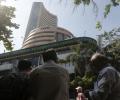
Yes Bank was the top gainer in the Sensex pack, soaring 24.03 per cent, after the lender said it had received a binding offer for $ 1.2 billion funding from an overseas investor. SBI, Infosys, Tata Motors, Bharti Airtel, HCL Tech and HDFC too rallied up to 7.69 per cent.

The broader markets were marginally higher with mid-caps and small-caps gaining 0.1-0.4 per cent on the BSE.

Foreign Portfolio Investors (FPIs) selling spree continued as they dumped Indian equity worth over Rs 5,800 crore this month so far on rising interest rates and geopolitical tensions in the Middle East. This came after such investors withdrew Rs 24,548 crore in October and Rs 14,767 crore in September, data with the depositories showed. Before the outflow, FPIs were incessantly buying Indian equities in the last six months from March to August and brought in Rs 1.74 lakh crore during the period.

The sharp correction in equity markets has taken a toll on mid-and-small cap stocks that have underperformed their large-cap peers. Thus far in calendar year 2022 (CY22), the mid-and-small cap indexes on the BSE have slipped over 8 per cent and 7 per cent respectively, as compared to a fall of around 6 per cent in the S&P BSE Sensex. While investors dumped mid-and small-cap stocks as the markets remained choppy over the past few weeks, analysts still expect these two segments to see good investor interest from a medium-to-long term perspective.

Unwinding of long dollar positions by banks too aided the sentiment

Investors are increasingly turning optimistic about shares of new-age companies. From broad-based 'sell' calls, analysts are giving thumbs up to Zomato, Paytm, and FSN e-Commerce Ventures-owned Nykaa as these companies have shifted focus to sustainable profits. The shares of Zomato hit a fresh 52-week high of Rs 126 apiece on the BSE on November 7, having rallied 15.4 per cent in one week.

From the Sensex firms, Tech Mahindra, NTPC, Tata Steel, Maruti, Infosys, Power Grid, Larsen & Toubro, Axis Bank, Titan, Reliance Industries, Wipro and Mahindra & Mahindra were the biggest gainers. Sun Pharma, UltraTech Cement, Tata Motors, Kotak Mahindra Bank, Bajaj Finance, State Bank of India and Nestle were among the laggards.

The central government is on track to meet its fiscal deficit target of 6.4 per cent of the GDP for 2022-23 on the back of strong growth in revenue collections, the World Bank said in its India Development Update on Tuesday. High nominal GDP growth in the first quarter supported strong growth in revenue collection, especially Goods and Services Tax (GST), despite tax cuts on fuel. Notwithstanding an increase in spending due to expanded fertilizer subsidies and food subsidies for vulnerable households in response to the commodity price shock, the government is on track to meet its FY22/23 fiscal deficit target of 6.4 per cent of GDP and the general government deficit is projected to decline to 9.6 per cent from 10.3 per cent in FY21/22 and 13.3 per cent in FY20/21.

Among the Sensex firms, Asian Paints, Tata Steel, HCL Technologies, Nestle, Maruti, JSW Steel, NTPC and Larsen & Toubro were the major laggards. Sun Pharma, Bajaj Finserv, Reliance Industries, State Bank of India and Bharti Airtel were the gainers.

'Earnings will be the catalyst for markets to march higher from here on out.'
.jpg)
Traders say the outlook for the rupee has improved on the back of a sharp narrowing in the current account deficit after government and central bank emergency measures such as curbing gold imports.

Sectorally, BSE metal, basic materials, energy, realty, power, oil and gas, finance, FMCG, bankex and telecom indices fell up to 1.71 per cent.

India will drive growth in the Asia-Pacific (Apac) region as the growth engine is likely to shift from China to South and Southeast Asia in the coming years, S&P Global Ratings said in a report on Tuesday. The rating agency's report projected China's growth to slow down to 4.6 per cent by 2026 from an estimated 5.4 per cent in 2023. India is likely to clock 7 per cent economic growth from 6.4 per cent estimated for 2023.
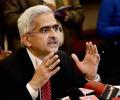
Reserve Bank Governor Shaktikanta Das on Monday said despite the latest headwinds arising from the Jackson Hole summit leading to extreme volatility, our banking system and financial markets are strong enough to withstand such pressures. Taking the markets by surprise, US Fed chair Jerome Powell had told the annual Jackson Hole summit of central bankers and economists last week that he would have to keep raising federal fund rates to tame inflation, which remains the biggest challenge to the world's largest economy. He also warned of the pains that such monetary policy actions would create on growth and jobs.

'An eerie similarity with 2019 inflation trajectory could now mean that the RBI and market inflation estimates could go awry.'

M&M was the biggest loser in the Sensex chart, falling 6.39 per cent, followed by Tech Mahindra, Nestle India, Bajaj Finance, Axis Bank, ITC, JSW Steel, HDFC Bank and RIL. On the other hand, Sun Pharma, Tata Motors, Bharti Airtel, L&T and Infosys were among the winners, rising up to 2.10 per cent.
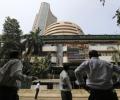
After rallying over 300 points, the 30-share BSE Sensex ended 169.14 points, or 0.42 per cent, higher at 40,581.71. Similarly, the broader NSE Nifty settled 61.65 points, or 0.52 per cent, higher at 11,971.80.

The rupee appreciated by 10 paise to close at a nearly six-week high of 60.29 against the US dollar in the previous session tracking a solid rally in local shares and continued dollar selling by exporters and some banks.

Investors' wealth eroded by Rs 7.59 lakh crore on Monday as the equity market took a heavy drubbing amid escalating tensions in the Middle East. The 30-share BSE Sensex plunged 825.74 points or 1.26 per cent to settle at 64,571.88 points. During the day, the index plummeted 894.94 points or 1.36 per cent to 64,502.68 points.

The Reserve Bank of India's (RBI's) latest order on unsecured loans is set to hit the banking sector's growth in the near-term, cautioned analysts, as they see banks slowing down on aggressive retail lending. Besides, cost of funds for non-banking finance companies (NBFC) is expected to inch up as banks will pass on higher capital charge to NBFCs. "We believe the fallout of the RBI action will be mainly on growth, given the rising dependence on unsecured retail loans and lending to NBFCs for growth.


The Reserve Bank on Monday asked banks to put in place additional arrangements for export and import transactions in Indian rupees in view of increasing interest of the global trading community in the domestic currency. Before putting in place this mechanism, banks will require prior approval from the Foreign Exchange Department of the Reserve Bank of India (RBI), the central bank said in a circular. "In order to promote growth of global trade with emphasis on exports from India and to support the increasing interest of global trading community in INR, it has been decided to put in place an additional arrangement for invoicing, payment, and settlement of exports / imports in INR," it said.

As markets complete the first half of the calendar year 2022 (CY22) with a fall of around 9 per cent, the interest-rate hike trajectory by global central banks, paired with the conundrum of inflation and growth, will move the needle for the market, observe experts. Here's a quick rundown on what they'll react to over the next six months.

Insufficient rainfall will have a negative impact on the economy.
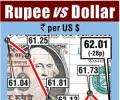
The RBI is widely expected to raise its key repo rate by 25 basis points to 8.00 per cent on Wednesday, its third such hike in four months after recent data showed both wholesale and retail inflation at multi-month highs.

HCL Tech was the top loser in the Sensex pack, skidding over 4 per cent, followed by Tech Mahindra Dr Reddy's, Wipro, TCS, Titan and Infosys. NSE Nifty plunged 167.80 points to 17,110.15.
